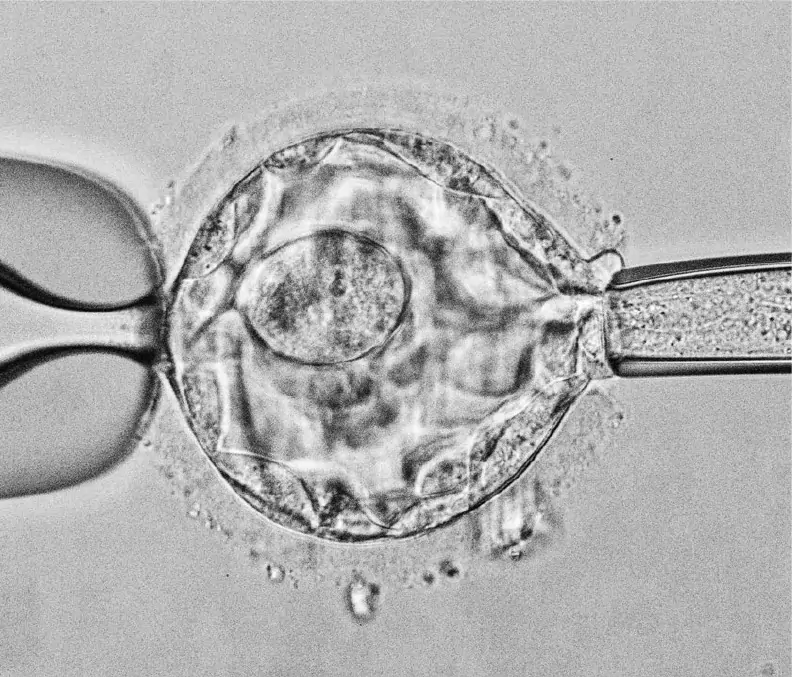
Q1: What is PGT-A?
PGT-A (Preimplantation Genetic Testing for Aneuploidy) is a genetic test performed on embryos to detect numerical chromosomal abnormalities (aneuploidies). The goal is to identify and transfer only embryos with the correct number of chromosomes (euploid embryos) into the uterus.
Q2: At What Stage of IVF is PGT-A Performed?
PGT-A is performed before the embryo transfer — during the IVF cycle, once the embryo reaches the blastocyst stage.
Q3: When and for Whom is PGT-A Recommended?
PGT-A is recommended for women aged 35 and above, or for patients who have a history of:
- Recurrent miscarriages
- Multiple failed IVF attempts
- Unexplained infertility
Q4: How Much does PGT-A Improve the Chances of Pregnancy?
Transferring a chromosomally normal embryo significantly improves the chance of a successful pregnancy.
For example, in women around 40 years old, the chance of pregnancy without PGT-A may be around 5%, while with PGT-A and transfer of a euploid embryo, the success rate can increase to up to 50%.
Q5: Is PGT-A Safe for the Embryo, and How is it Done?
The most delicate part of PGT-A is the embryo biopsy.
At Reproart, we use high-precision laser technology and experienced embryologists to safely perform this procedure:
- On Day 3, the embryo’s outer shell is gently opened with a laser.
- On Day 5 or 6, once it reaches the blastocyst stage, a small number of cells (from the trophectoderm – the part that will become the placenta) are biopsied.

The embryo remains unharmed and continues to develop normally. The biopsy sample is analyzed at our in-house genetics lab, Genomics.
Q6: What Results are Considered Suitable for Transfer after PGT-A?
A result showing euploidy means the embryo has a normal number of chromosomes.
In some cases, lower-level mosaicism or segmental abnormalities may still be acceptable for transfer after consultation with a geneticist and reproductive endocrinologist.
Q7: How Long does PGT-A Analysis Take?
Once the embryo biopsy is sent to the genetics lab, the PGT-A results typically is ready up to 20 days.
Q8: Are There any Risks with This Testing?
PGT-A is safe when performed by highly trained professionals. However, small risks include:
- Sample quality issues, such as insufficient DNA for analysis
- Temperature fluctuations during sample transport (which we avoid by using our on-site lab)
- Biopsy-related stress, which is minimized at Reproart through expert technique and state-of-the-art equipment
Q9: Can PGT-A be Performed on Frozen Embryos?
Yes, it can. In this case, the frozen embryo is thawed, biopsied, and then frozen again.
However, there is a slightly higher risk of damage due to the multiple freeze-thaw cycles.
Q10: What is the Main Benefit of PGT-A?
PGT-A shortens the time to pregnancy and significantly reduces the risk of miscarriage, since only chromosomally normal embryos are selected for transfer.