What is PGT-M?
Preimplantation Genetic Testing for Monogenic Diseases (PGT-M) is a laboratory technique used to detect single-gene mutations in embryos before they are transferred into the uterus. This helps couples who carry or are affected by inherited conditions reduce the risk of passing them on to their child.
PGT-M is distinct from PGT-A (which checks chromosome count). Instead, it focuses on specific mutations — such as those that cause cystic fibrosis, thalassemia, or Duchenne muscular dystrophy.
When is PGT-M Recommended?
When a couple is aware of close or distant relatives monogenic diseases, that is, disorders caused by single gene modification they may be at risk of having a child affected by the genetic disorder. As a couple, you may be aware of relatives affected by a genetic disease or you may find out from carrier screening (via blood tests) performed here or elsewhere. Preimplantation Genetic Testing for Monogenic Diseases (PGT-M) is used to reduce the risk of transmitting such diseases.
PGT-M may be advised in cases where one or both partners — or their family members — are affected by or are carriers of inherited single-gene disorders. These include:
- Autosomal recessive conditions, such as cystic fibrosis or beta-thalassemia (if both partners are carriers)
- Autosomal dominant conditions, such as Huntington’s disease (if one partner is affected)
- X-linked disorders, such as Duchenne muscular dystrophy (if the mother is a carrier)
- Inherited cancer syndromes, such as BRCA1 or BRCA2 mutations
- Previous child or pregnancy affected by a monogenic disorder
How is PGT-M Performed at Reproart?
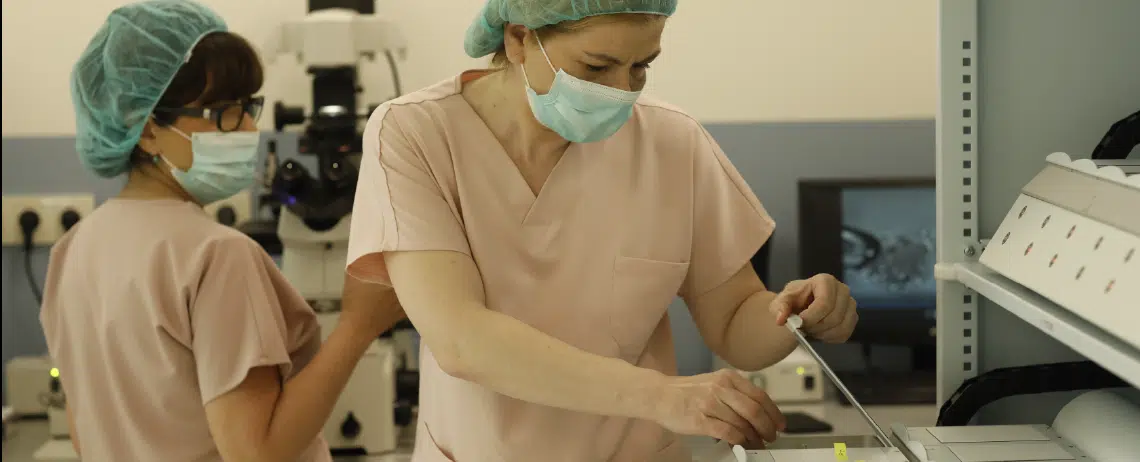
PGT-M is done as part of an IVF cycle. At Reproart, embryo development takes place in our laboratory until the blastocyst stage (Day 5 or 6). A few cells from the trophectoderm (which later becomes the placenta) are biopsied for testing.

1. Family-Specific Genetic Design
In any case of a known genetic condition, a full genetic workup is required for both partners to determine if there is a risk of a child affected by the genetic condition. This process involves collecting DNA samples from both partners and, if necessary, their family members. If there is a risk, a genetic testing approach is tailored specifically to that family’s genetic profile. It is designed to detect if the condition is present in an embryo as a condition or simply as a carrier of the condition. If a family has a rare or not yet genetically mapped condition, a custom diagnostic kit must be created. It is generally best to wait until the testing approach has been developed prior to beginning an IVF cycle to create embryos for testing.
2. Embryo Biopsy
When a patient receives In-Vitro Fertilization (IVF) at Reproart, the embryo’s development up to a certain stage proceeds outside the body, in the IVF Laboratory. That is when the embryo’s biopsy is performed.
On the third day of the embryo’s development, assisted laser hatching is performed to make a small hole in the zona pellucida, the glycoprotein coat that surrounds the embryo. Excellent embryos typically escape from this zona pellucida a few days later. The creation of this small hole doesn’t harm the embryo. It only allows the embryo to escape sooner.
On day five or six, when the embryo reaches the blastocyst stage, trophectoderm biopsy is performed, removing a few cells that extend through the hole in the zona pellucida. The trophectoderm is a part of the blastocyst, that subsequently becomes placenta. The chromosomes in these cells of the trophectoderm are believed to be representative of the chromosomes throughout the entire embryo. Removal of a few cells from the trophectoderm does not harm the inner cell mass cells that will become the fetus (baby).
Subsequently, the biopsied cells are sent for genetic testing.
3. Cryopreservation
Embryos are immediately frozen (vitrified) after biopsy, until the genetic analysis is completed
4. Genetic Testing
Biopsied cells are sent to our partner laboratories in the UK or USA. These labs perform advanced genetic fingerprinting to determine which embryos are affected, carriers, or unaffected by the specific condition being tested.
5. Embryo Selection and Transfer
Once results are available, suitable embryos are selected for thawing and transfer, based on your medical and genetic consultation.
Our Support
Our team at Reproart is here to support you — from family history review to genetic counseling, IVF planning, and final embryo selection. We understand how personal and important this journey is, and we’re here to make it effective, clearer and safer.

Contact Personal Manager
Make an appointment or request more information. Leave your contact details and our team will get in touch with you!
Frequently Asked Questions (FAQs)
We know that fertility care often brings up many questions — and that every journey is different. Below you’ll find answers to some of the most common questions our patients ask.
Does PGT-M test for all genetic conditions?
No. Once a genetic condition is identified, PGT-M targets that specific mutation known to be present in your family. Genetic testing can test for more than one condition; but, we do not test for all the known genetic conditions at the same time in embryos. If the genetics of your condition has not been identified previously, testing may be possible only after additional research has been performed.
Is the embryo harmed during the biopsy?
No. Only a few cells from the trophectoderm (which becomes the placenta) are removed. The inner cell mass, which forms the fetus, is left untouched. Embryos usually recover well and continue normal development after thawing.
Can PGT-M and PGT-A be done together?
Yes. Combining PGT-M with PGT-A allows us to evaluate embryos for both single-gene disorders and chromosomal abnormalities, which may be particularly helpful in complex cases or when maternal age is a factor. It would be a shame to transfer an embryo that is not affected for the genetic condition but that is not otherwise euploid (hence not capable of implanting and resulting in a healthy live birth). Unfortunately, it may be necessary to create a larger number of embryos in order to have one embryo that satisfies all criteria for selection when testing for multiple genetic conditions in combination with euploidy.