What is PGT-A?
Preimplantation Genetic Testing for Aneuploidy (PGT-A) is a laboratory procedure used during IVF to examine whether an embryo has the correct number of chromosomes. This testing is performed before embryo transfer, helping to select embryos with the highest chance of leading to a healthy pregnancy.
A healthy embryo contains 46 chromosomes (23 pairs). If the number of chromosomes is abnormal, the embryo is called aneuploid. Most aneuploid embryos are not viable — they either fail to implant or result in miscarriage. Some, however, may still lead to pregnancy but carry a higher risk of complications.
PGT-A allows us to identify euploid embryos (those with the correct chromosome number) and avoid transferring embryos with known chromosomal abnormalities. This significantly improves the chances of pregnancy, reduces emotional distress, and helps protect maternal health by lowering the risk of miscarriage.
Which Aneuploidies Can Be Detected?
PGT-A can detect a wide range of chromosomal abnormalities, including:
- Trisomy 21 (an extra chromosome 21)
- Trisomy 18
- Trisomy 13
- Sex chromosome abnormalities, such as:
- 47,XXY (Klinefelter syndrome)
- 45,XO (Turner syndrome)
- 47,XXX / 47,XYY
As maternal age increases, so does the likelihood of aneuploid embryos. For example, about 45% of embryos from women aged 28–35 are aneuploid, while this rate can rise to 85% in women aged 39–45. PGT-A helps identify which embryos are most likely to implant successfully and result in a healthy pregnancy.
Why is PGT-A Recommended?
PGT-A can be especially valuable in certain situations — helping to guide embryo selection when the chances of chromosomal imbalance are higher.
For example, it may be recommended if you’re over the age of 35, have had multiple unsuccessful IVF cycles, or have experienced early pregnancy losses in the past. It can also be useful when there is a history of chromosomal abnormalities in a previous pregnancy or if male infertility plays a significant role.
Some couples may carry structural rearrangements in their chromosomes or be carriers of specific inherited conditions, even if no symptoms are present. In such cases, PGT-A — sometimes combined with PGT-M — allows for a more personalized and safer path forward.
By identifying which embryos are chromosomally balanced, PGT-A can reduce the number of unsuccessful transfers, minimize the risk of miscarriage, and bring greater clarity and emotional reassurance during the IVF journey.
Genetic Testing at Genomics
All PGT-A analysis at Reproart is conducted at Genomics – our in-house Reproductive Genetics Center. Equipped with advanced diagnostic platforms and led by a specialized genetics team, Genomics operates under strict quality standards to ensure accuracy and clinical reliability.
Carrying out testing within Reproart allows us to:
- Deliver results in a timely and predictable manner
- Maintain seamless continuity between laboratory procedures and clinical decision-making
- Eliminate delays and risks related to external shipment of biological material
- Support real-time collaboration between your care team and our genetic specialists
For patients, this integrated approach offers peace of mind — with every step managed under one coordinated system, from embryo biopsy to clinical recommendations.
How is PGT-A Performed?
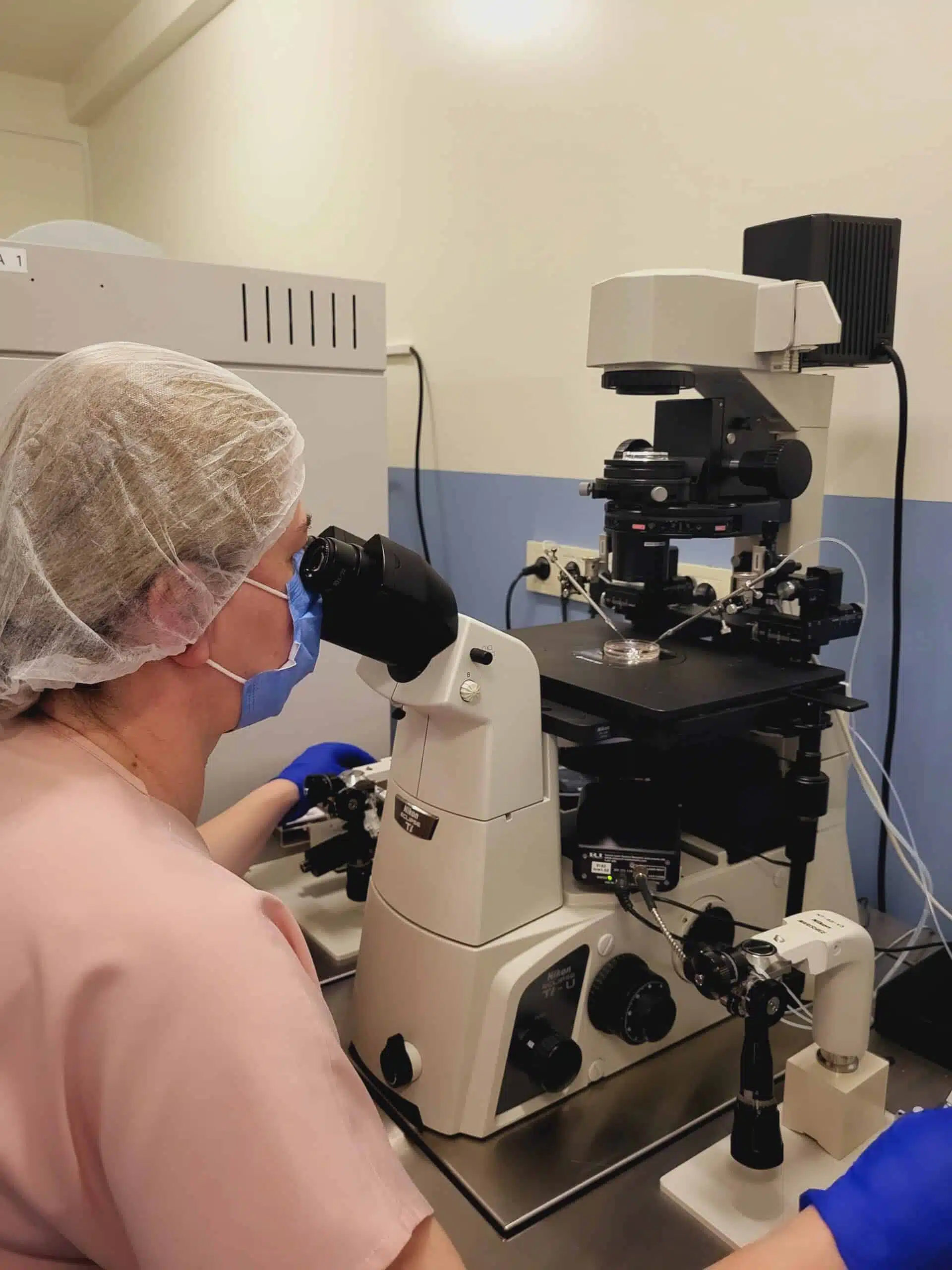
When a patient receives In-Vitro Fertilization (IVF) at Reproart, the embryo’s development up to a certain stage proceeds outside the body, in the IVF Laboratory. That is when the embryo’s biopsy is performed.
On the third day of the embryo’s development, assisted laser hatching is performed on a small section of the outermost layer that surrounds but is not part of the embryo. On day five or six, when the embryo reaches the blastocyst stage, trophectoderm biopsy is performed, removing a few cells that extend through the hole in the outermost layer. The trophectoderm is a constituent part of the blastocyst, which subsequently becomes the placenta. Subsequently, the biopsied cells are sent for genetic testing to our In-house Reproductive Genetics Lab Genomics.
Although cells that would have become placenta are removed the cells that will become the fetus and the baby are not harmed. Following biopsy embryos are cryopreserved until genetic test results are reported. Upon thawing embryos recover and develop normally.

1. Embryo Biopsy During IVF
At Reproart, embryo development takes place in our IVF laboratory until the blastocyst stage (Day 5–6). A biopsy of a few trophectoderm cells — which later form the placenta — is performed without disturbing the inner cell mass that becomes the fetus.
2. Cryopreservation
Embryos are immediately frozen (vitrified) after biopsy, while the genetic analysis is performed.
3. Genetic Testing at Genomics
Biopsied cells are analyzed at Genomics, our in-house reproductive genetics center, using advanced next-generation sequencing (NGS) to assess the chromosome count.
4. Embryo Selection and Transfer
Once results are available, a euploid embryo is thawed and transferred into the uterus during a carefully timed cycle.

Contact Personal Manager
Make an appointment or request more information. Leave your contact details and our team will get in touch with you!
PGT-A Success Rates
PGT-A does not change the genetic quality of embryos, but it helps us make more informed choices — by identifying which embryos are chromosomally balanced and have the highest potential to implant and develop into a healthy pregnancy.
By selecting a euploid embryo, we can often reduce the number of transfers needed, shorten the time to pregnancy, and significantly lower the risk of miscarriage. This means fewer failed cycles, less emotional and physical strain, and a more efficient path to success.
At Reproart, our clinical data shows that for women over 40, transferring a tested euploid embryo can increase the chance of pregnancy from around 10–14% to nearly 50%, while miscarriage risk drops from about 50% to 10%.
Although outcomes vary from patient to patient, these results are consistent with international research and reflect the impact that precise embryo selection can have — especially in more complex or age-related cases.
Frequently Asked Questions (FAQs)
We know that fertility care often brings up many questions — and that every journey is different. Below you’ll find answers to some of the most common questions our patients ask.
Does PGT-A guarantee pregnancy?
No. PGT-A increases the chance of selecting an embryo with the highest potential to implant, but pregnancy also depends on many other factors — including uterine health, hormone levels, and overall reproductive function. It improves the odds, but cannot eliminate uncertainty entirely.
Is PGT-A recommended for all IVF patients?
Not always. PGT-A is most beneficial for patients with certain risk factors — such as advanced maternal age, repeated IVF failure, or recurrent miscarriage. Your doctor will help determine whether PGT-A adds clinical value in your specific case.
Can I still have a healthy baby without doing PGT-A?
Yes. Many pregnancies occur without genetic testing. PGT-A simply provides additional information to guide embryo selection. It’s an option not a requirement and may or may not be part of your personalized treatment plan.