Why is Ultrasound Important?
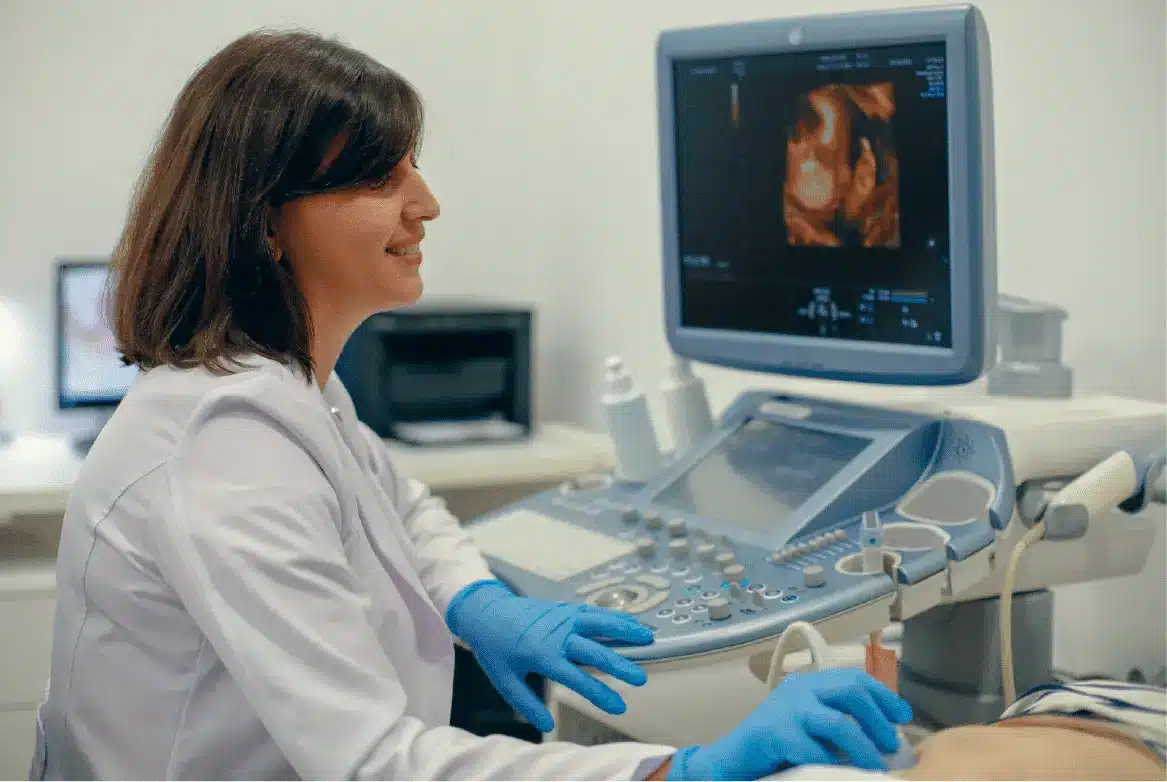
Ultrasound allows visualization of internal organs with sound waves that are of a frequency that we are unable to hear. Ultrasound can be done with virtually no pain and with no damage to patient tissues.
Ultrasound examinations help:
- Diagnose causes of infertility or pelvic pain
- Monitor ovarian follicles during ovulation induction
- Evaluate the uterus, ovaries, and endometrial lining
- Detect uterine abnormalities (fibroids, polyps, adhesions)
- Guide fertility procedures such as egg retrieval or embryo transfer
- Confirm and monitor early pregnancy
- Assess non-reproductive organs including liver, kidneys, thyroid, bladder, and breast
Ultrasound is safe, widely accessible, and provides valuable diagnostic insights without radiation exposure.
When is Ultrasound Recommended?
Ultrasound may be performed for reproductive or general medical reasons. It is commonly recommended when:
- Undergoing fertility evaluation or assisted reproduction (IUI, IVF)
- Experiencing menstrual irregularities, pelvic pain, or abnormal bleeding
- Monitoring pregnancy progress
- Evaluating conditions like fibroids, ovarian cysts, or endometriosis
- Screening breast or thyroid abnormalities
- Investigating abdominal discomfort or organ enlargement
Types of Ultrasound Services at Reproart

We offer the following ultrasound services:
- Transvaginal ultrasound – for evaluating the uterus, ovaries, and endometrium
- Pelvic ultrasound – for general female reproductive health
- Breast ultrasound – for breast lump assessment and screening
- Abdominal ultrasound – for liver, gallbladder, kidneys, pancreas, and spleen
- Thyroid ultrasound – for thyroid nodules and enlargement
- Scrotal ultrasound – for evaluating the testicles and male infertility concerns
- Pregnancy ultrasound – to confirm pregnancy, check fetal heartbeat, and monitor gestational development
How is Ultrasound Performed?
Depending on your medical needs, we offer:
- Transvaginal ultrasound: A small probe is inserted into the vagina to obtain detailed images of pelvic organs
- Abdominal ultrasound: A handheld transducer is moved across the skin with gel to scan abdominal or thyroid areas
Exams are painless, non-invasive, and typically take 10–30 minutes.
How to Prepare
- For abdominal/pelvic scans: A full bladder may be needed
- For transvaginal scans: No special preparation is required
- Wear comfortable clothing; our staff will guide you step by step
What to Expect
- You may feel mild pressure during the procedure, but no pain
- No recovery time is needed — you may return to normal activities
- Your doctor will explain the results and next steps clearly
Understanding Your Results
Following the ultrasound, your Reproductive Endocrinologist or Radiologist will:
- Review your reproductive or general organ health
- Explain any abnormalities or findings
- Recommend appropriate treatment or next steps

Contact Personal Manager
Make an appointment or request more information. Leave your contact details and our team will get in touch with you!
Frequently Asked Questions (FAQs)
We know that fertility care often brings up many questions — and that every journey is different. Below you’ll find answers to some of the most common questions our patients ask.
Will the procedure hurt?
Most patients feel only mild pressure from the blunt probe. The exam is typically very well tolerated. The high frequency sound waves do not cause any pain.
Can ultrasound detect all reproductive issues?
Ultrasound provides critical structural information but may be combined with blood tests or additional diagnostics for a complete fertility evaluation.
Do I need a full bladder?
Only for abdominal or pelvic scans. Transvaginal ultrasound does not require bladder filling.